
Back to News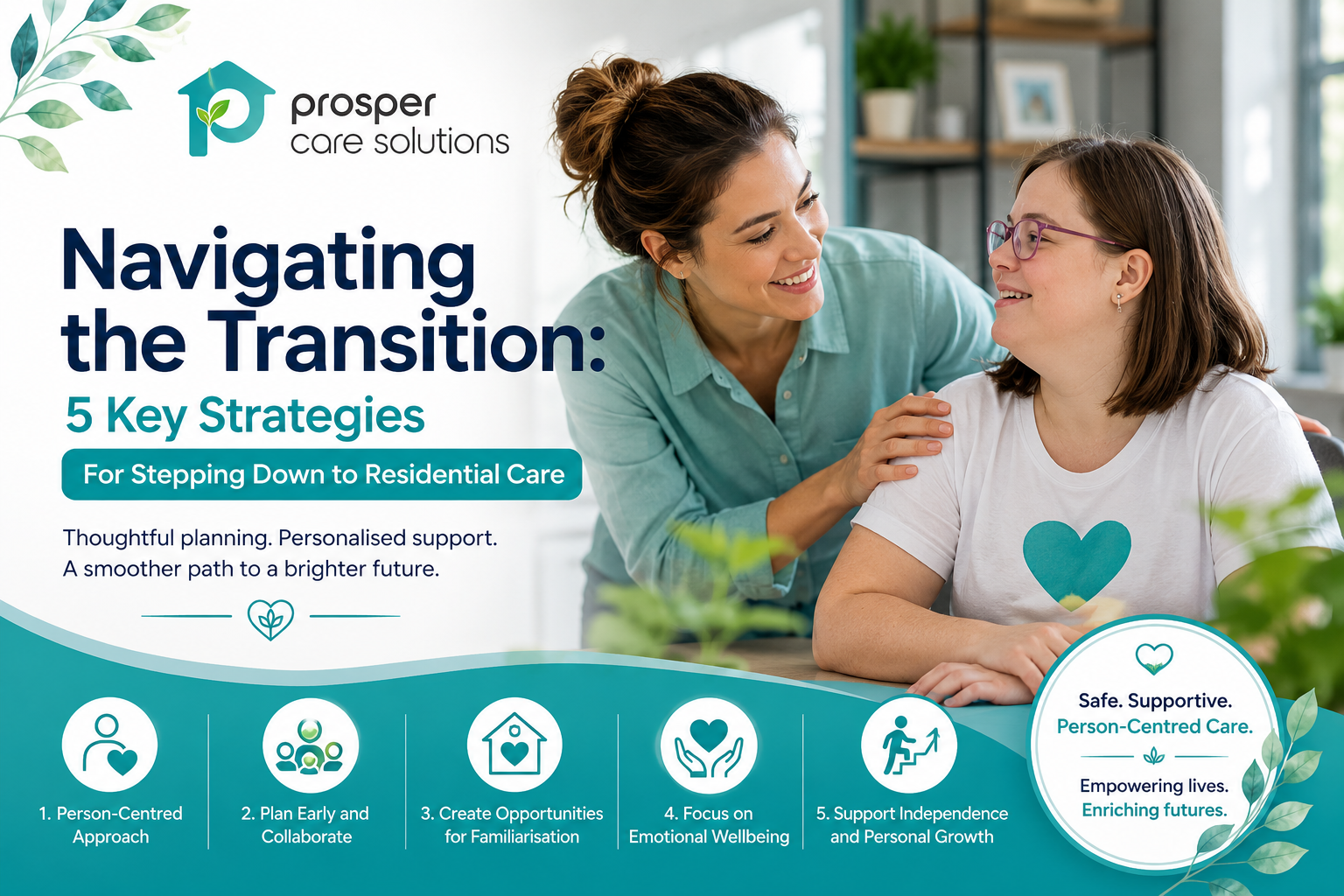
Therapeutical approach and PBS
Navigating the Transition: 5 Key Strategies for Stepping Down to Residential Care
23 May 20264 min readTherapeutical approach and PBS
Transitioning from a secure hospital setting to a specialist residential support home can be challenging. Discover five evidence-based strategies Prosper Care utilizes to ensure a safe, structured, and therapeutic journey toward independence.
Navigating the Transition: 5 Key Strategies for Stepping Down to Residential Care
Moving from a hospital, supported living placement, family home, or another care setting into residential care is a significant life transition. While change can sometimes feel overwhelming, the right planning, support, and person-centred approach can make the process smoother and more positive for everyone involved.
At Prosper Care Solutions, we understand that every individual has unique needs, preferences, and aspirations. Our goal is to ensure that each transition is carefully managed to promote stability, independence, dignity, and wellbeing.
Here are five key strategies that can help make the move into residential care a successful and positive experience.
1. Put the Person at the Centre of the Transition
A successful transition begins with understanding the individual. Person-centred care means involving the person in every stage of the process, wherever possible.
This includes:
Understanding their preferences, routines, and interests
Listening to their concerns and aspirations
Involving them in decisions about their new home
Respecting their communication needs and personal choices
When individuals feel heard and valued, they are more likely to feel comfortable and confident about the move.
Why It Matters
Transitions can create uncertainty. Maintaining familiar routines and incorporating personal preferences helps reduce anxiety and promotes a sense of control.
2. Plan Early and Collaborate with Everyone Involved
Effective transitions require strong communication and collaboration between all stakeholders.
This may include:
Families and advocates
Social workers
Community professionals
Healthcare teams
Current support providers
Residential care staff
A detailed transition plan should outline:
Support needs
Health requirements
Risk assessments
Medication arrangements
Communication strategies
Desired outcomes
By working together, everyone can ensure continuity of care and reduce potential challenges.
The Importance of Partnership
Good collaboration helps create a shared understanding of the individual's needs and ensures that support remains consistent throughout the move.
3. Create Opportunities for Familiarisation
Moving into a new environment can be daunting. Providing opportunities to become familiar with the residential setting before moving in can significantly improve the experience.
Examples include:
Visiting the home in advance
Meeting staff members
Spending short periods at the service
Participating in activities
Viewing their future bedroom and communal areas
Gradual introductions allow individuals to build trust and become comfortable with their new surroundings.
Building Confidence Through Familiarity
The more familiar a person becomes with their new environment, the more likely they are to experience a positive and successful transition.
4. Focus on Emotional Wellbeing
Transitions affect more than practical arrangements—they can have a significant emotional impact.
Individuals may experience:
Anxiety
Excitement
Uncertainty
Fear of change
Concerns about leaving familiar people and places
Supporting emotional wellbeing is essential during this period.
Helpful approaches include:
Providing reassurance and consistent communication
Using visual supports and social stories
Encouraging family involvement
Offering emotional support throughout the process
Celebrating milestones and achievements
A Compassionate Approach
Understanding and acknowledging emotions can help individuals feel safe, respected, and supported during times of change.
5. Continue Supporting Independence and Personal Growth
Residential care should never be viewed simply as accommodation. It should be a place where people can thrive, develop new skills, and achieve their goals.
A successful transition focuses on:
Building independence
Encouraging community participation
Developing daily living skills
Promoting meaningful relationships
Supporting education, employment, or volunteering opportunities where appropriate
Every person deserves the opportunity to live a fulfilling life and reach their full potential.
Looking Beyond the Move
The transition itself is only the beginning. Ongoing support should focus on helping individuals achieve positive outcomes and enjoy meaningful experiences.
How Prosper Care Solutions Supports Successful Transitions
At Prosper Care Solutions, we have extensive experience supporting individuals through complex transitions into residential care. Our dedicated teams work closely with local authorities, healthcare professionals, families, and advocates to ensure that every move is carefully planned and tailored to the individual's needs.
We believe that successful transitions are built on:
Person-centred care
Positive behaviour support
Effective communication
Partnership working
Promoting independence and choice
Our aim is to provide safe, nurturing environments where individuals can feel valued, respected, and empowered to live fulfilling lives.
Conclusion
Transitioning into residential care is a major life event, but with the right support, it can be a positive step towards greater stability, independence, and wellbeing.
By placing the individual at the centre of planning, encouraging collaboration, supporting emotional wellbeing, promoting familiarity, and focusing on long-term personal growth, care providers can help create successful and lasting outcomes.
At Prosper Care Solutions, we are committed to making every transition as smooth, positive, and person-centred as possible, ensuring that the people we support feel confident, respected, and empowered throughout their journey.
Interested in learning more about our residential care services?
Visit Prosper Care Solutions to discover how we support individuals to live meaningful, independent, and fulfilling lives.